Vet’s Panama Service Not Covered By VA. Hundreds More.
Hundreds of U.S. troops have been denied VA claims linked to 1980s duty in Panama amid toxic chemicals and Agent Orange remnants.
Patty Nieberg | Published Dec 1, 2025 12:04 PM EST
Steven Price grew up in Panama and enlisted in the U.S. Army in 1981. For his first base, he “signed up to go back home,” volunteering for duty at the Panama Canal Zone, where more than 10,000 soldiers were stationed in the 1980s.
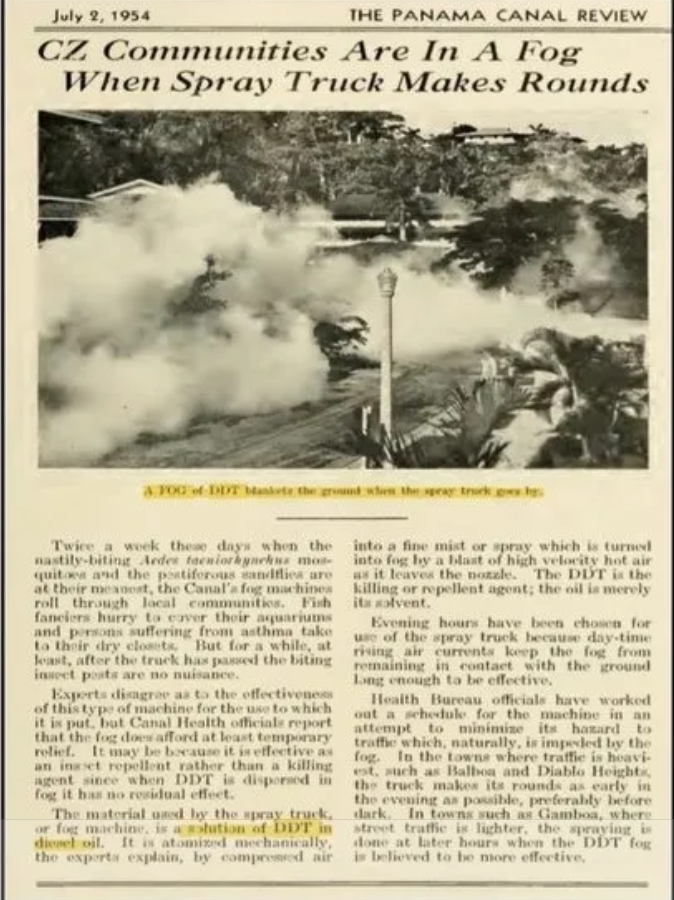
He spent three and a half years in Panama, first as a radio operator and then as a linguist, deploying to Honduras and El Salvador. He was, he remembers, constantly amid toxic pesticides. To control insects, the poisons were mixed with diesel and sprayed from trucks. Duty in Panama also meant exposure to the remnants of herbicides, including Agent Orange, that had been routed through the bases in the 1950s, ’60s and ’70s on its way to combat in Vietnam.
Price left the Army in 1987. Now 66, Price is a 100% disabled veteran who was diagnosed with Chronic Lymphocytic Leukemia and Ischemic Heart Disease. In recent decades, Price and hundreds of other veterans of Panama discovered troubling information they were not privy to during their service, but became relevant as they were diagnosed with a range of health issues.
Agent Orange and similar chemicals that he worked around in Panama have long-understood health impacts. Along with those exposures, Price believes the pesticides used in the country may also be to blame for health issues.
But the Department of Veterans Affairs does not consider duty like Price’s in Panama as “presumptive” exposure to Agent Orange and other herbicides that would unlock benefits. The VA follows a Department of Defense list of duty locations for “presumptive” status, a list that does not currently include Panama.
In a bipartisan letter sent to then-Veterans Affairs Secretary Denis McDonough in February 2024, 19 members of Congress wrote that public documents corroborate the presence of Agent Orange in Panama and nearly 400 veterans have developed cancer, heart disease, and other health issues “consistent with herbicide exposure,” but have been denied disability compensation.
Panama vets left out of toxic exposure coverage
Under the 2022 Promise to Address Comprehensive Toxics Act, PACT Act, veterans can receive disability compensation for specific health issues linked to toxic exposures from their service — i.e., Iraq and Afghanistan burn pits, and Agent Orange in Vietnam. Those locations form a list of duty stations where vets are presumed to have been exposed just by being there.
But Panama is not on the list.
“We have not just a plethora, but an overwhelming amount of evidence that shows that Agent Orange and DDT and a bunch of other chemicals were shipped into Panama,” Price said.
Advocates have developed a robust campaign on toxic exposures in Panama. A civilian researcher catalogued the relevant science, and a Navy veteran launched a search platform of public documents to support VA claims. In 2017, a military spouse catalogued Agent Orange shipments in her book: “The Travels of Orange: and Other Toxins.”
A 2018 Government Accountability Office report found “inaccurate” and “incomplete” federal records for shipping, storage, and testing documents related to Agent Orange and similar chemicals.
Pesticide mixed with diesel
In addition to Agent Orange, Price advocates for expanding Panama-related toxins. A 1954 article from The Panama Canal Review notes that inside the canal, DDT mixed with diesel fuel was sprayed to combat mosquitoes. Those fogging operations “released benzene- and dioxin-bearing particulates equivalent in toxicity to other exposures already covered by the PACT Act of 2022,” veteran groups wrote in a call-to-action announcement, referring to burn pits.
Task & Purpose viewed a letter that Price obtained from a doctor at the Texas Oncology Medical Center in San Antonio, Texas, which states that “the association of benzene and leukemia is established.”
‘Presumptive’ list set by Pentagon
Price submitted his VA disability claim in September and it was denied 30 days later.
But he’s also found a relevant example of a vet whose claim is essentially the same as his and who was approved by the VA. Robert Butler is a Marine Corps veteran who also served in Panama between 1971 and 1972 and was diagnosed with ischemic heart disease. After being denied by the VA, Butler appealed using federal documents showing numerous herbicide shipments to Panama. A 2020 Board of Veterans’ Appeals decision found there was enough evidence to validate his exposure.
Price said Butler’s case is a helpful reference point, but that the VA does not use other appeal cases as precedents for approving disability benefits.
“I was sprayed by trucks. I saw it in the field. I even used some of the same reference documents,” Price said. “I’ve been denied.”
A 2023 National Academies of Sciences, Engineering, and Medicine report found that the presumption process lacked “specificity, and criteria for how conditions are identified,” and added to the VA’s “list of medical conditions for consideration for presumptive status.”
“The lack of defined criteria for establishing presumptive conditions leads to inconsistency and undermines veterans’ confidence in the fairness of the system,” Jon Retzer, deputy national legislative director of Disabled American Veterans, told the Senate Veterans’ Affairs committee in October.
Price says he did not pursue the claim to increase his own VA benefits, which are already rated at 100% disabled, but to push the agency to acknowledge the hazards that troops faced in Panama.
“I’m already taken care of financially under benefits for my 100% disability for the financial side and the VA side, and education, so there’s nothing that would come of this, but proving the fact that, yes, I was exposed to toxic chemicals in Panama,” Price said. “It’s emotional. knowing that any day, I could either have a heart attack or die, but if I die, I want my children to know what I died from, from toxic exposure.”
Looking forward
Gaps in the process led Reps. Maria Salazar (R-Fla.) and Joaquin Castro (D-Texas) to introduce a bill that would’ve authorized VA claims for veterans with specific health conditions who served in Panama from 1958 to 1999, when the U.S. withdrew.
Two Congressional aides working on a new bill said they are preparing a version but are discussing a smaller window of time and whether to include other toxins, like pesticides.
The fiscal year 2025 defense bill required that the Department of Defense brief the House and Senate Armed Services committees within 90 days on the “use and presence of herbicide agents” in the Panama Canal Zone. The two congressional aides say that the briefing has not taken place.
Along with his own health, Price now worries about the U.S. imminent return to the region as the Trump administration makes a military pivot towards Latin America. He worries that the U.S. recently began sending forces into a 20-year-old Panamanian jungle course where Price once was stationed and soldiers trained for Vietnam combat. President Donald Trump has also repeatedly promised to reclaim the Panama Canal.
“Let us not forget the collateral damage that was imposed on some of these folks, and we’re sending them right back in there,” Price said. “Are we sure we’re doing the right thing by sending these troops back there without protection, and without letting them know that rolling around in the grass out there in that jungle school might not be the best freaking idea right now?”
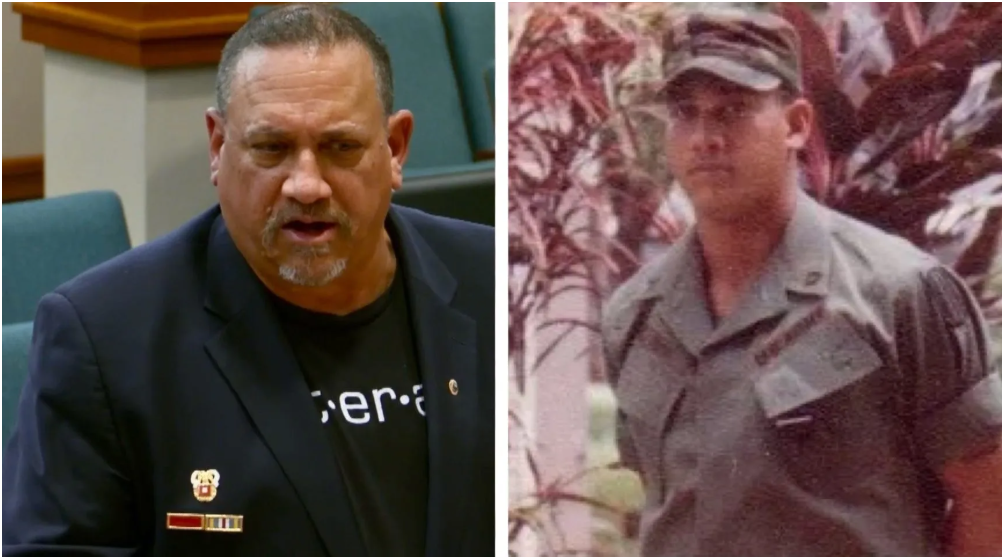
Army veteran Steven Price testifies at the Texas House of Representatives this year, alongside a photo from his time stationed in Panama in the early 1980s. Photo courtesy of Steven Price.
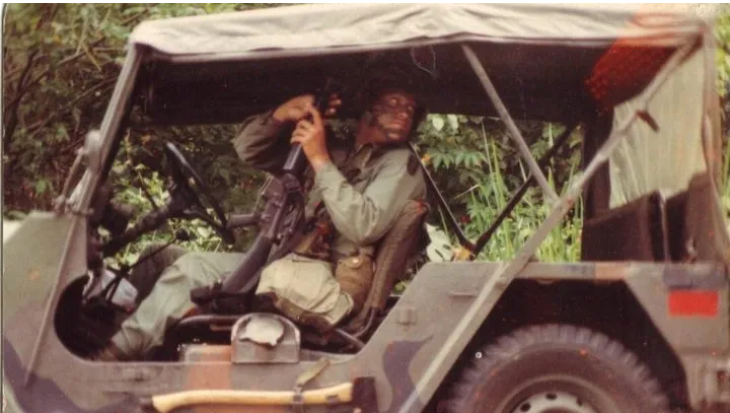
Army veteran Steven Price testifies at the Texas House of Representatives this year, alongside a photo from his time stationed in Panama in the early 1980s. Photo courtesy of Steven Price.
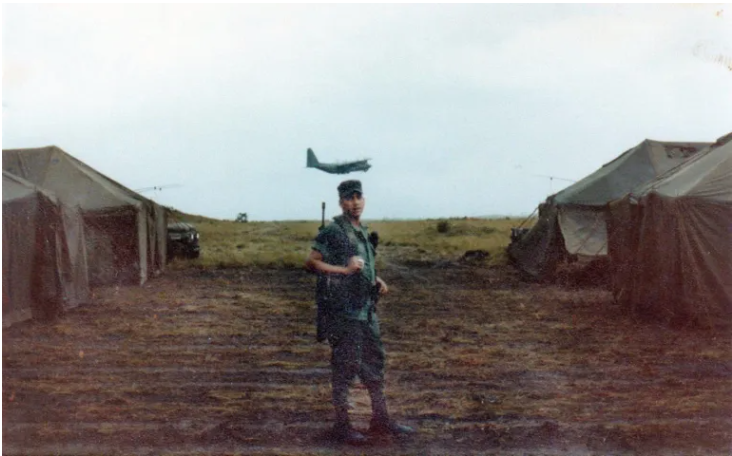
Army veteran Steven Price testifies at the Texas House of Representatives this year, alongside a photo from his time stationed in Panama in the early 1980s. Photo courtesy of Steven Price.
Picture #1 “Communities are In a Fog!”